A home pool can be a source of relaxation, exercise, and family fun, but it also brings responsibilities that extend beyond routine cleaning. While most homeowners focus on water clarity and sanitation, the air surrounding the pool can be affected by chemical imbalances in ways that impact lung comfort and overall respiratory health.
Clear water is only part of a healthy swimming environment. Balanced chemistry and good airflow are essential for keeping the air safe to breathe.
Why Chemical Balance Affects the Air, Not Just the Water
When people think of pool maintenance, they often consider filters, pumps, and chlorine levels. Yet the chemistry inside the water influences the air directly above it, especially in areas where ventilation is limited.
The following factors commonly contribute to poor air quality around a pool:
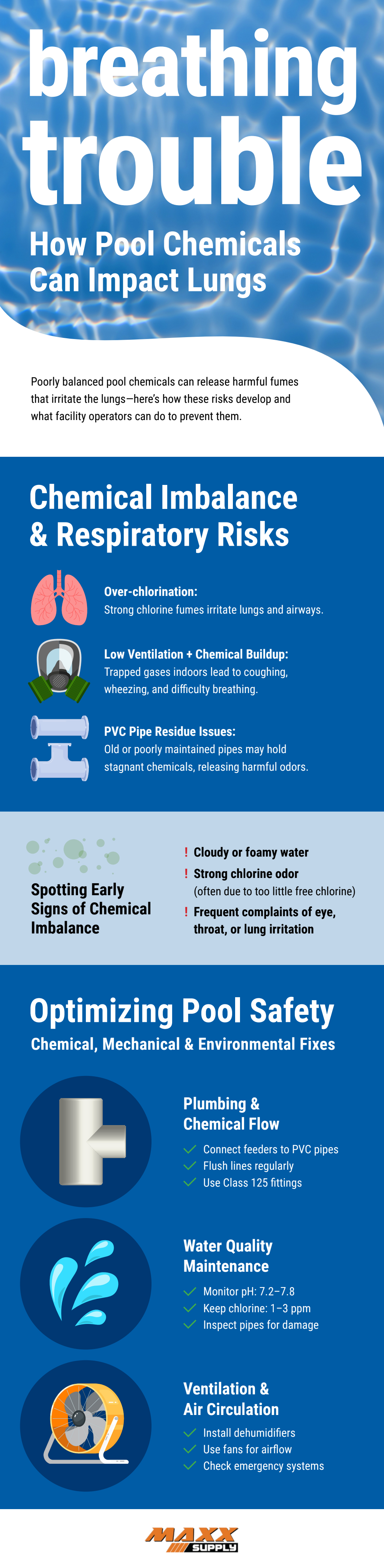
- Chlorine Levels That Are Too High
Chlorine is critical for sanitation, but excessive amounts can lead to vapors that irritate the lungs. These fumes may trigger coughing, wheezing, or discomfort, particularly for young children or anyone with asthma or other respiratory sensitivities. - Limited Ventilation or Stagnant Air
Even when water chemistry is within the recommended range, enclosed or semi-enclosed pool spaces can trap disinfectant byproducts. Without steady airflow, irritating compounds linger in the environment far longer than they should. - Chemical Residue Inside Plumbing Systems
Older PVC piping or worn-out fittings may collect chemical residue over time. When water pressure spikes or temperatures rise, these residues can release odors or irritants into the surrounding air. Choosing durable, chemical-resistant components, such as Class 125 fittings, helps reduce this risk.
Common Red Flags Around Your Pool
You can often spot air-quality issues early if you know what to look for:
• Water that appears hazy, cloudy, or foamy
• A persistent “chlorine smell,” which usually indicates buildup of chloramines
• Swimmers reporting burning eyes, irritated throats, or lingering coughing
These signs suggest both the air and water need attention.
Practical Ways to Improve Air Quality Around the Pool
Keeping your pool atmosphere healthy involves a combination of plumbing care, chemical consistency, and proper ventilation.
- Maintain Clean and Efficient Plumbing
• Flush circulation lines periodically
• Use chemical-compatible PVC fittings
• Ensure dosing systems feed sanitizer directly into active water flow - Stay on Top of Water Chemistry
• Keep pH steady between 7.2 and 7.8
• Maintain chlorine between 1 and 3 ppm
• Inspect plumbing before each swimming season begins - Boost Air Movement in Enclosed Areas
• Add dehumidifiers to reduce moisture and chemical accumulation
• Encourage natural airflow with fans, louvers, or open designs
• Confirm emergency exhaust equipment is in proper working order
A Safe Pool Requires Clean Air and Clean Water
A pool should be a refreshing retreat, not a source of lung irritation. By managing chemical levels, improving ventilation, and maintaining your plumbing system, you can create a poolside environment that supports both comfort and respiratory health.
Clear water may be the visual goal, but clean, breathable air is just as important. With regular upkeep and awareness, your pool can remain a place of enjoyment all season long. For more on this, check out the accompanying resource from Maxx Supply, a supplier of schedule 40 PVC elbows.